
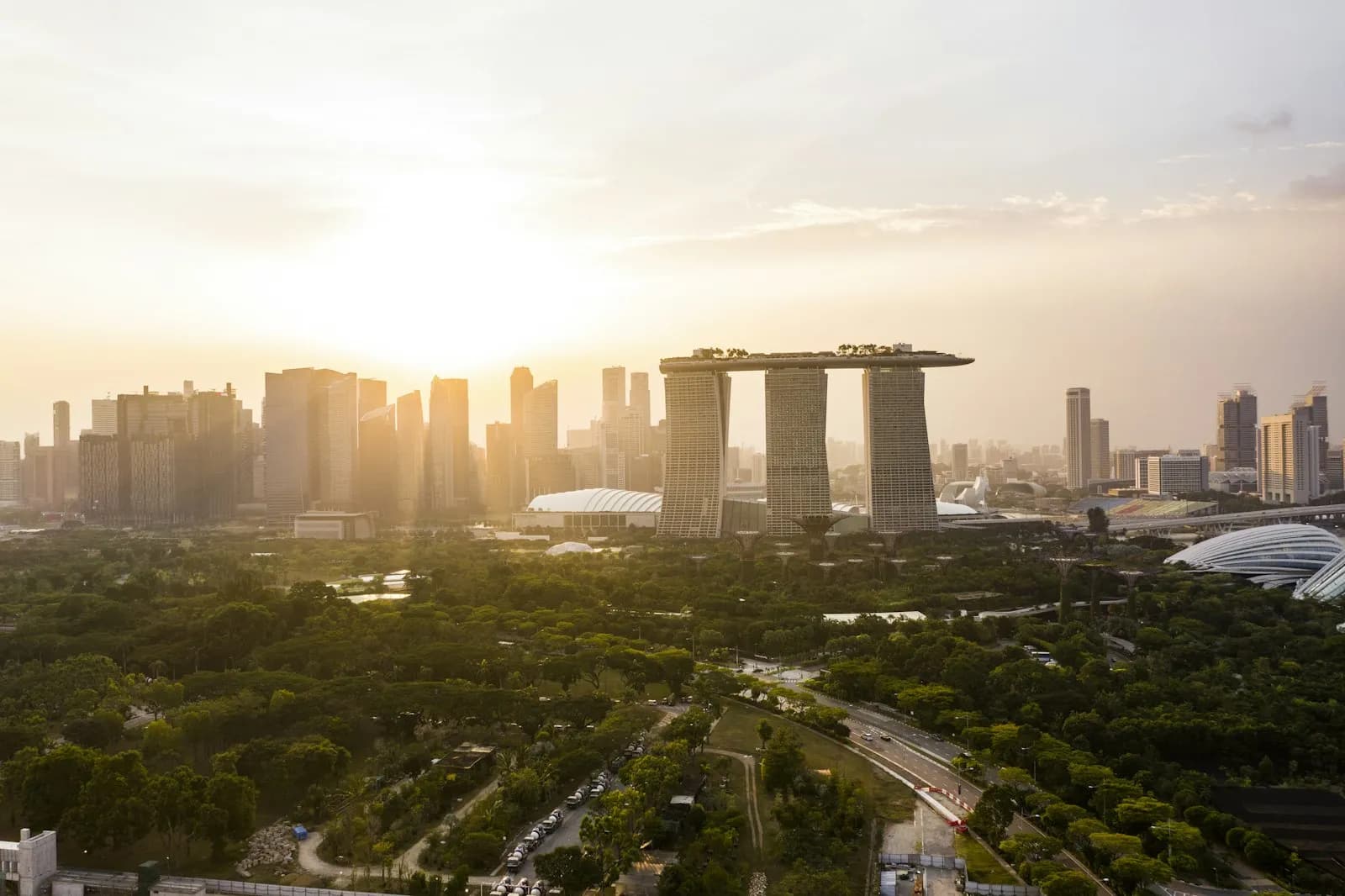
Singapore
Singapore property 2026: 60% ABSD and the foreign buyer's arithmetic
Singapore is among the most secure and transparent property markets in the world. For foreign buyers, however, the 60% additional buyer's stamp duty changes the arithmetic entirely. This page is written to answer one question: when Singapore makes sense, and when another market would serve you better.
Figures updated 08/2026
Market overview
Since April 2023, foreign nationals buying any residential property in Singapore pay ABSD of 60% on the purchase price, on top of the basic buyer's stamp duty (BSD), which is progressive up to 6%. A SGD 2 million apartment therefore incurs SGD 1.2 million in ABSD alone. Two exceptions are worth noting: US citizens, along with citizens and permanent residents of the EFTA states — Switzerland, Norway, Iceland and Liechtenstein — are treated as Singapore citizens under free trade agreements; Singapore permanent residents pay ABSD of 5% on a first property.
Private home prices are rising at roughly 5–7% in 2026 on the URA index. Apartments in the Core Central Region (CCR) sit at around SGD 3,200/ft2, and in the Outside Central Region (OCR) at around SGD 2,150/ft2. Gross rental yields are only 2.5–3.5%, low relative to the cost of capital, given high asset prices and a rental index that has cooled from its 2023 peak.
Foreign nationals may buy private condominium units and strata apartments freely, without approval. Landed property is restricted: it requires special approval and in practice is feasible almost only in Sentosa Cove. HDB flats are outside what may be purchased. Most property is on a 99-year leasehold; freehold forms a minority and carries a clear price premium.
Our candid assessment: at 60% ABSD, buying in Singapore in an individual foreign name makes sense in only a few situations — where a permanent residency plan is already in place, where a family member who is a citizen or permanent resident can lawfully hold title, or where there is genuine long-term occupation need tied to a child's studies alongside a family office plan. If the objective is cash flow and capital growth, we would put Singapore beside Dubai, Athens or Limassol before you decide.
Investment case
Why this market
Asia's store of wealth
A strong Singapore dollar, rigorous rule of law, long-range planning and state-regulated supply help Singapore property hold its value through crisis cycles. This is a capital-preservation channel, not a return-maximising one.
A well-ordered rental market
Rental demand from foreign professionals is stable, contracts are standardised and vacancy is low. Gross yields are only 2.5–3.5%, but the reliability of the cash flow and the quality of tenants rank among the highest in the world.
Infrastructure for a long-term family strategy
For families with a child studying in Singapore or establishing a family office, a suitable apartment forms part of the infrastructure of a long-term plan. Where a family member is a permanent resident or citizen, the purchase structure can materially reduce the ABSD liability — through lawful tax advice, and never through structures designed to circumvent the rules.
Legal
What foreign buyers need to know
- ABSD of 60% applies to every residential purchase by a foreign national, except US and EFTA nationals under trade agreements; purchases through a company attract 65%. There is no lawful way to avoid ABSD; holding property in someone else's name carries serious legal risk.
- Foreign nationals may not buy HDB flats or executive condominiums still within their restricted period. Landed property requires approval under the Residential Property Act.
- Most property is on a 99-year leasehold. Value declines as the remaining term shortens, and below 60 years financing becomes very difficult, so the age of the lease belongs in any price comparison.
- Buying a home creates no residency right and confers no preference in a Singapore permanent residence application.
- Annual property tax on non-owner-occupied homes is progressive, up to 36% of the annual value. It comes straight off the net yield for a letting investor.
Linked residency programme
Singapore Residence 2026: GIP at S$10 million, Employment Pass and ONE Pass
Answers
Frequently asked questions
What tax does a foreign national pay when buying property in Singapore?
There are two charges on purchase: the basic buyer's stamp duty (BSD), progressive up to 6%, and ABSD of 60% on the purchase price. A SGD 2 million apartment therefore incurs roughly SGD 1.27 million in stamp duties of all kinds, close to 64% of the value of the home. Exceptions apply to citizens of the United States, Switzerland, Norway, Iceland and Liechtenstein, who are treated as Singapore citizens under trade agreements; permanent residents pay 5% on a first property.
With ABSD at 60%, is Singapore property worth investing in?
For most purely financial investors, no. Purchase taxes amount to 60% of the value, while rental yields are only 2.5–3.5% and price growth of 5–7% a year is unlikely to make that back over a reasonable horizon. Singapore becomes sensible where a family member who is a citizen or permanent resident can lawfully hold title, where you already have a permanent residency plan in place before buying, or where the occupation need is genuinely long term. We usually set this option beside Dubai, where yields run at 6–8% with no income tax, so that you can compare before deciding.
What types of property may a foreign national buy in Singapore?
Private condominium units and strata apartments in approved developments may be bought freely, with no limit on the number, though ABSD applies to each. HDB flats and executive condominiums still within their restricted period may not be bought. Landed property requires government approval under the Residential Property Act and in practice is feasible only in Sentosa Cove, subject to its own conditions.
Does buying property in Singapore make a PR application easier?
No. Property ownership forms no part of the ICA's permanent residence criteria and confers no preference of any kind. The routes to permanent residence in Singapore run through three doors: employment on an EP or S Pass; the Global Investor Programme, with investment from SGD 10 million into a business or fund — not into property; and family ties. We would caution against any advice bundling 'buy a home to settle in Singapore': that is simply incorrect.
Rent or buy when a child studies in Singapore?
The financial case usually favours renting. ABSD of 60% plus progressive property tax on non-owner-occupied homes puts the total cost of ownership well above rent over the 4–6 years of a child's studies. Buying merits consideration only where the family has a long-term Singapore strategy such as permanent residence or a family office, or where a family member qualifies to hold title at a lower ABSD rate. We can prepare a rent-versus-buy comparison built around your family's own structure.
Market information is provided for reference as at the date shown and does not constitute investment advice. Property values may rise or fall. Contact VNIS Investment for advice matched to your objectives and financial capacity.
Beyond Future