
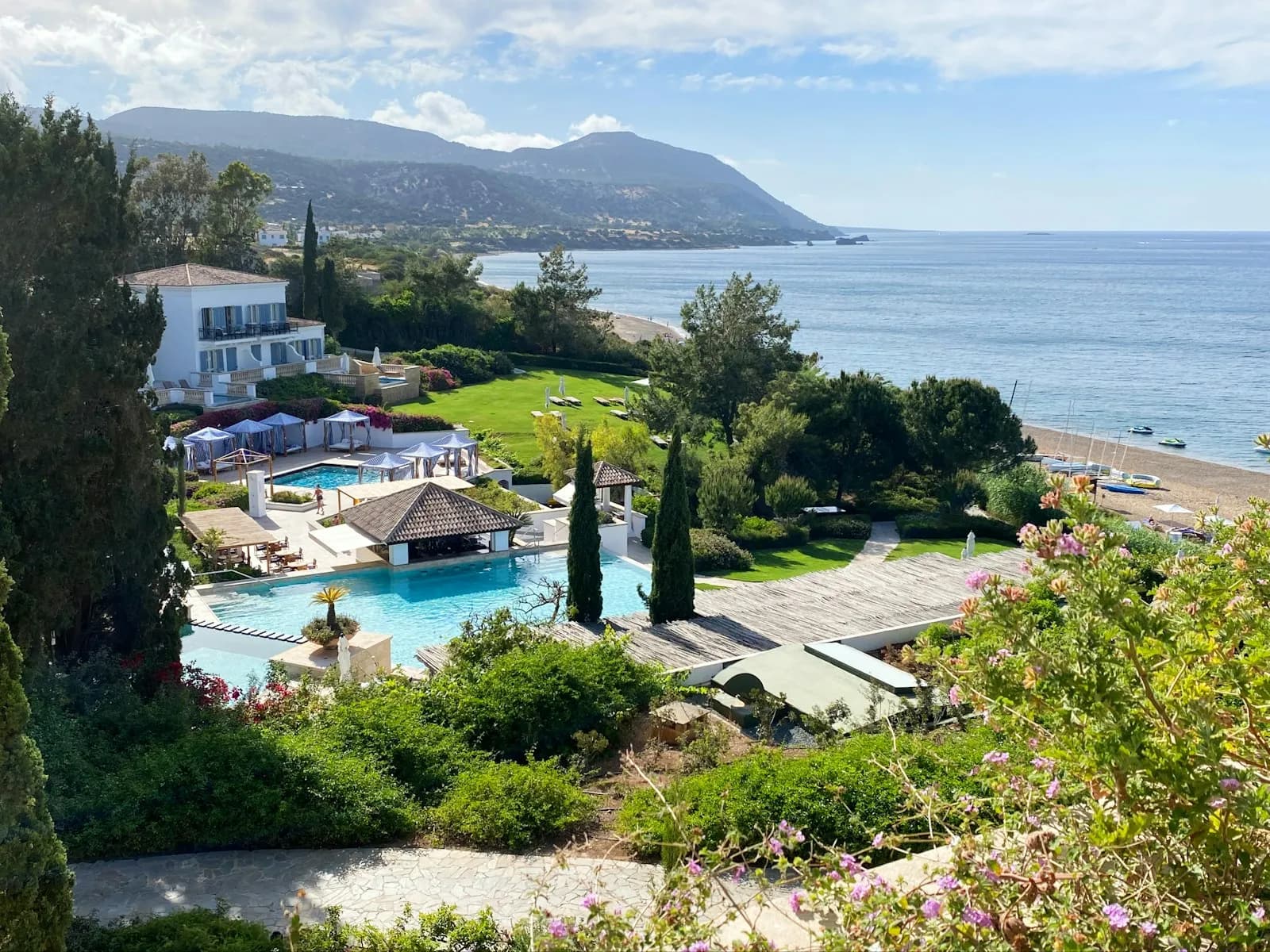
Cyprus
Cyprus property 2026: Limassol drives the market, yields of 5–6%
Cyprus combines three attributes that rarely appear together in a small market: a genuine international business centre in Limassol, a EUR 300,000 permanent residency programme processed quickly, and zero annual property tax. In exchange, non-EU buyers need a clear grasp of the limit on the number of properties and of how VAT applies.
Figures updated 08/2026
Market overview
Limassol is the most expensive market on the island, with a median asking price of roughly EUR 650,000 and new apartments from EUR 4,500/m2 upwards, on the strength of its position as an international financial services and technology hub. Paphos and Larnaca are materially softer, and Larnaca is forecast to grow fastest on the back of new infrastructure projects. After a record year for total transaction value in 2025, the market as a whole is forecast to see moderate growth of 3–5% in 2026.
Gross rental yields in Limassol run at roughly 5.3–6%, above the Southern European norm. Demand comes from staff at international companies in foreign exchange, technology and shipping, while the supply of quality apartments remains limited. One- and two-bedroom apartments serving foreign professionals form the segment with the deepest liquidity.
Non-EU buyers must obtain permission from the Council of Ministers — a step approved almost as a matter of course for individual buyers — and as a general rule may hold no more than two properties, or one home together with a shop or a plot within the prescribed area limits. New property from EUR 300,000 excluding VAT qualifies for permanent residency under the fast-track route; please see our Cyprus immigration page.
Three points warrant close due diligence in Cyprus: the state of the title deeds, since some older projects have been years late in issuing separate titles; VAT at 19% on new homes, reduced to 5% on the first tranche of floor area used as a main residence subject to statutory conditions; and resale liquidity in the ultra-prime segment, which depends on foreign buyers. An independent lawyer must check the title and the developer's obligations before you pay a deposit.
Investment case
Why this market
The business centre of the Eastern Mediterranean
Limassol hosts thousands of international finance, technology and shipping companies together with their high-earning staff. That underpins rental demand and price resilience far more durably than in purely resort markets.
European residency at a cost known in advance
New property from EUR 300,000 qualifies for a permanent residency application covering the whole family, with processing of roughly 2–3 months. That combination of investment level and speed is among the most competitive in Europe today.
Low holding costs
Cyprus levies no annual property tax anywhere in the country and no inheritance tax; rental income attracts exemptions and reliefs; and VAT on a first home may be as low as 5% subject to conditions. Long-term holding costs sit below most EU countries.
Legal
What foreign buyers need to know
- Non-EU buyers must obtain permission from the Council of Ministers and are limited to a maximum of two properties under the general rules. Ownership structured through a company requires separate legal advice.
- The 6(2) residency route accepts only a residential property bought new, first-hand, from a developer. Resale property does not qualify under the residential channel.
- Before paying, check the status of the title deed and any mortgages the developer holds over the property; include protective clauses in the contract and lodge the contract with the Land Registry.
- VAT on a new home is 19%. The reduced 5% rate applies only to the first tranche of floor area of a main residence under the conditions in force, so confirm how it will be applied before signing.
- Northern Cyprus, the area outside the control of the Republic of Cyprus, carries an entirely different set of legal risks over title. We advise only on transactions within the area controlled by the Republic of Cyprus.
Linked residency programme
Cyprus Permanent Residence 2026: investment from €300,000
Answers
Frequently asked questions
What procedure applies when a Vietnamese national buys property in Cyprus?
The process runs in four steps: sign the contract through an independent lawyer, lodge the contract with the Land Registry, apply for Council of Ministers permission, then complete the transfer. The permission step is administrative, and individual buyers with a clean record are almost always approved. Non-EU nationals are limited in principle to a maximum of two properties. The whole process can be completed over 1–2 trips to Cyprus, or carried out under a power of attorney.
Does buying a EUR 300,000 property in Cyprus grant permanent residency?
Yes, if the structure is right: a residential property bought new and first-hand from a developer, with a minimum value of EUR 300,000 excluding VAT, of which at least EUR 200,000 must be paid at the time of application, together with evidence of foreign-sourced income from EUR 50,000 a year upwards depending on family composition. The permanent residence card is usually issued within 2–3 months. Resale property does not qualify under the residential channel.
Should one buy in Limassol, Paphos or Larnaca?
Limassol has the strongest rental demand and the highest prices, suiting objectives of cash flow and value retention. Larnaca offers entry prices 30–40% lower, benefits from new port and waterfront projects, and is forecast to grow fastest — which suits an appetite for growth. Paphos is the traditional resort market for Northern European and British buyers, steady in rhythm and softer in price. The structure our clients most often choose is a new two-bedroom apartment in Limassol or Larnaca, reaching the EUR 300,000 threshold so it can be tied to a residency application.
What are the annual holding costs for a property in Cyprus?
They are among the lowest in Europe. The national annual property tax was abolished in 2017; what remains are local charges and building management fees, typically EUR 1,000–3,000 a year for an apartment depending on amenities. Rental income is taxed on the progressive scale with the first EUR 19,500 a year exempt for individuals, plus defence contribution and GHS levies as prescribed. These figures are best worked through with a local accountant.
What is the biggest risk when buying property in Cyprus?
The title position. Some older projects have taken years to issue separate title deeds for individual units, and a property may be mortgaged by the developer to a bank. Three safeguards: instruct an independent lawyer to check the title and any debt obligations before the deposit; lodge the sale contract with the Land Registry to establish priority; and choose only developers with a record of issuing titles on time.
Market information is provided for reference as at the date shown and does not constitute investment advice. Property values may rise or fall. Contact VNIS Investment for advice matched to your objectives and financial capacity.
Beyond Future